
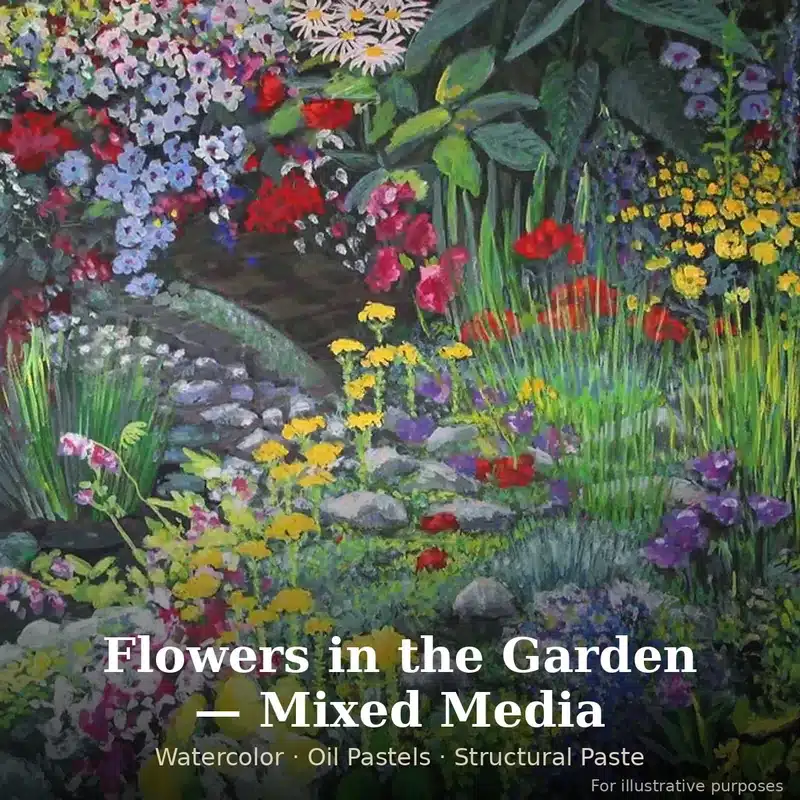
Homeschool Art Class: Flowers in the Garden — Mixed Media

$70.00
Explore the beauty of flowers using mixed media — watercolor, oil pastels, and structural paste.

Using EMA Funds to Register for Mia Cake House Classes
Mia Cake House is an approved Step Up For Students provider, offering a variety of creative baking and decorating classes that qualify as educational enrichment activities. Families can use their EMA (Educational Marketplace Account) funds to register for any of our eligible classes or camps by following the simple steps below.
Misuse of funds:
To comply with Step Up rules, EMA funds can only be used for classes where the scholarship beneficiary is the participant. They cannot be used to register a sibling, parent, or guardian. Misusing scholarship funds is treated as a serious matter and can result in revocation of the scholarship.
Step 1: Visit the EMA Marketplace
Go to the EMA Marketplace and log in to your account.
Step 2: Find Mia Cake House
Search for Mia Cake House as a provider. Browse through our enrichment activities and add to your cart the class or camp you would like your child to join.
Step 3: Wait for Your Voucher Code
Once your activity is added to the cart, Mia Cake House will issue a voucher code for your selected class.
Funds are processed approximately 3 hours after they are allocated, so please allow some time to receive your code.
Step 4: Register on Our Website
After receiving your voucher code, visit classes.miacakehouse.com.
Add the desired class to your cart and proceed to checkout.
At checkout, enter your voucher code in the coupon field.
You will not be required to make any payment.
6 in stock